
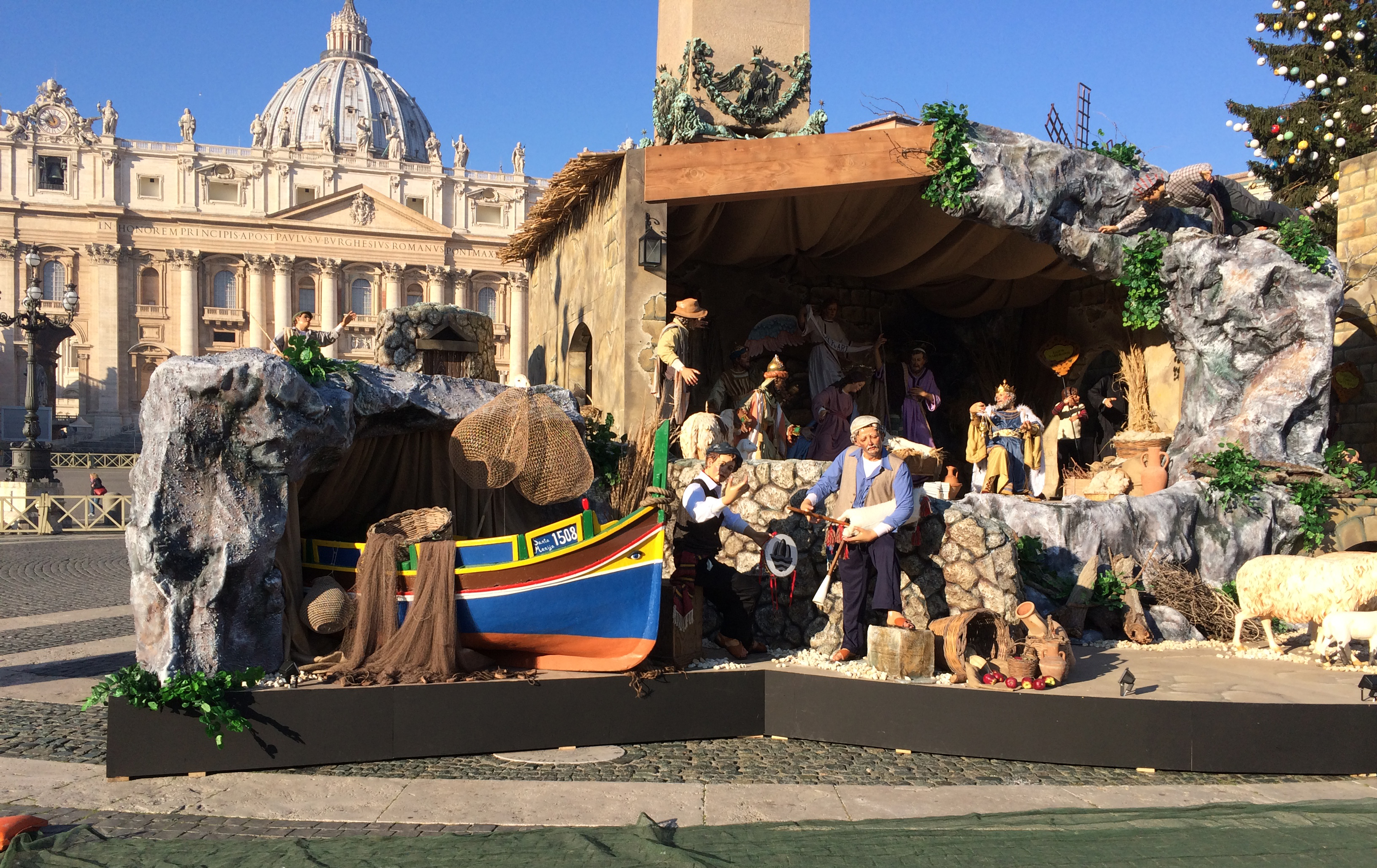
Start of Nativity Scenes
However, the Nativity scene that is now recreated in churches and town squares around the world was first conceived by Saint. Francis of Assisi.
The majority of what we know about Francis is derived from the “Life of St. Francis,” written by the 13th-century theologian and philosopher St. Bonaventure.
Francis was born to a family of merchants in the Umbrian town of Assisi which is in present-day Italy in the year 1181. However, Francis was averse to his family’s wealth at an early age and removed his clothes in the square of public.
In 1209, he established the mendicant order of Franciscans which was a religious organization that devoted itself to the work of the charity. The Franciscans today serve by helping with the spiritual and material requirements of the poor and marginalized socially.
According to Bonaventure, Francis 1223 sought the permission of pope Honorius III to undertake a project “for the kindling of devotion” to the birth of Christ. In preparation for the birth of Christ, Francis “made ready a manger, and bade hay, together with an ox and an ass,” in the tiny Italian city of Greccio.
One person, who was part of the crowd who gathered for the event, said that Francis included a carved doll who cried in joy, and “seemed to be awakened from sleep when the blessed Father Francis embraced Him in both arms.”
The miracle of the doll crying moved everyone present Bonaventure writes. However, Francis also performed a miracle as well: the hay the child laid in healed animals and also protected people from illness.
Nativity Imagery in Art
The Nativity story continued to grow within Christian worship even after Francis died. In 1291 the pope Nicholas IV, the first Franciscan pope, directed that an everlasting Nativity scene be built in Santa Maria Maggiore, the largest church dedicated to Mary, the Mary. Mary located in Rome.
The Nativity theme was the most prominent in Renaissance art.
The first live Nativity scene, which was well-known for its depiction by Italian Renaissance painter Giotto di Bondone in the Arena Chapel of Padua, Italy and established the new tradition of staging Christ’s birth. Christ. It is possible to find these specific scene pieces in some rare outdoor nativity sets.
In the tondo, a painting depicting the Adoration of the Magi painted by 15th century painters Fra Filippi and Angelico, there are not only do they have their sheep, a donkey, a cow and an ox, but there is also a peacock who flies over the manger’s top to see Jesus.
Political Turn of Nativity Scenes
Following Jesus’ birth, Jesus Then King Herod was concerned that his power was under threat by Jesus was threatened, decreed the execution of any boys who were less than 2 years old. of age. Jesus, Mary, and Joseph were ordered to leave to Egypt.
In recognition the fact that Jesus, Mary, and Joseph were themselves refugees In recent times certain churches have utilized the Nativity sceneries as a type of political activism , expressing their views on the need for immigrants to receive justice. Particularly the “protest nativities” have criticized the executive order regarding family separation along the U.S.-Mexico border.
These displays, which draw attention to the suffering of asylum seekers and immigrants are bringing the Christian tradition into the 21st century.
Vanessa Corcoran is an adjunct professor of the history department as well as an academic advisor at Georgetown University.