
Bolivian cuisine is a mosaic of flavors, textures, and cultural stories, reflecting the country’s rich indigenous heritage, Spanish influence, and the diverse landscapes that stretch from the high Andean plateaus to the lush Amazon. While many food lovers know Bolivia for its stunning landscapes, its culinary treasures remain a hidden gem for those outside South America. Bringing Bolivian dishes into your kitchen is not just about cooking—it’s about experiencing a vibrant culture, tasting centuries of tradition, and sharing meals that tell a story of family, festival, and community.
At the heart of Bolivian cuisine is simplicity paired with bold flavors. Ingredients are often sourced from local farms, with corn, potatoes, quinoa, and a variety of fresh vegetables forming the backbone of many dishes. The Andean highlands, particularly cities like La Paz and El Alto, have shaped recipes to accommodate the high altitude and cooler climate, resulting in hearty, comforting meals that warm both body and soul. From La Paz to your kitchen, you can recreate these dishes at home with some attention to detail and a willingness to explore flavors you may not have encountered before.
Salteñas: Bolivia’s Beloved Empanadas
No exploration of Bolivian cuisine is complete without salteñas, the country’s iconic baked empanadas. Salteñas are not just food; they are an institution, a staple of breakfast or a mid-morning snack that brings families and communities together. What makes them distinct is their slightly sweet, soft pastry filled with a juicy, spiced mixture of meat, potatoes, peas, and sometimes olives or raisins. The key to perfect salteñas lies in the broth-filled filling, which gives each bite an irresistible, juicy burst.
Recreating salteñas at home requires a little patience. The dough is enriched with butter and a touch of sugar, giving it a tender texture that crisps slightly in the oven. Preparing the filling involves slow-cooking the meat with onions, cumin, paprika, and sometimes a hint of chili, then incorporating a gelatinized broth so that it remains succulent after baking. Once baked, salteñas are best enjoyed warm, paired with a refreshing glass of api, a traditional spiced corn drink, or a cup of strong Bolivian coffee.
Llajwa: The Spicy Heart of Bolivian Meals
Every Bolivian meal is incomplete without llajwa, a vibrant chili and tomato sauce that bursts with flavor. Often served alongside grilled meats, potatoes, or even salteñas, llajwa is simple yet incredibly versatile. Its bright red hue comes from ripe tomatoes and aji amarillo, a yellow chili pepper native to the Andes, which lends a mild heat balanced by a smoky, fruity undertone. Fresh cilantro adds a herbaceous note, while onions provide crunch and depth.
Making llajwa at home is delightfully straightforward. Roasting the tomatoes and peppers before blending brings out their natural sweetness, creating a sauce that’s both tangy and comforting. A drizzle over roasted potatoes or grilled chicken instantly elevates the dish, and the freshness of homemade llajwa captures the essence of Bolivian markets, where produce is colorful, vibrant, and deeply connected to the land.
Pique a lo Macho: A Hearty Bolivian Feast
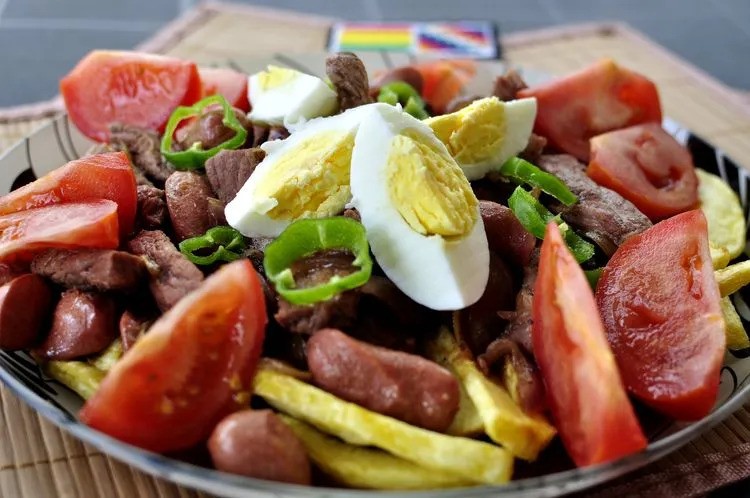
For those who love bold, hearty flavors, pique a lo macho is the ultimate Bolivian indulgence. Often found in local eateries in La Paz, this dish is a celebration of textures and tastes. Strips of beef are stir-fried with onions, bell peppers, tomatoes, and garlic, then layered over a bed of crispy French fries. What sets pique a lo macho apart is the addition of boiled eggs, spicy chili, and a generous drizzle of mustard or ketchup, resulting in a dish that is simultaneously comforting and electrifying.
Recreating pique a lo macho at home invites experimentation. While traditional recipes rely on fresh, high-altitude beef, choosing a tender cut and marinating it with paprika, cumin, and garlic ensures that the meat remains succulent. The fries should be golden and crisp, creating the perfect foundation for the spicy, savory topping. Eating this dish is an experience—each bite combines the crunch of potatoes, the juiciness of meat, and the subtle kick of chili.
Silpancho: Layers of Love and Flavor
Another dish that exemplifies Bolivian home cooking is silpancho, a layered plate that celebrates simplicity and satisfaction. Originating from Cochabamba but beloved throughout the country, silpancho features a thin, breaded beef cutlet placed atop a bed of rice, then topped with fried eggs, tomatoes, onions, and sometimes fried potatoes. The result is a visual feast, and the flavors combine in perfect harmony—crunchy, savory, tangy, and filling.
At home, preparing silpancho is as much about technique as it is about presentation. The meat is pounded thin, seasoned with salt, pepper, and cumin, and then lightly breaded before frying. The eggs should be cooked sunny-side up, adding richness to each bite. Slicing the silpancho into manageable portions allows the layers to mingle, giving every mouthful a balance of textures.
Salteña’s Sweet Cousin: Api and Buñuelos
Bolivian cuisine is not just about savory delights; sweet treats are equally integral to the culinary landscape. Api, a warm, thick beverage made from purple or white corn, cinnamon, cloves, and sugar, is a staple during breakfast or festive mornings. Its rich aroma fills the kitchen, creating a cozy atmosphere, especially during colder months. Api is often paired with buñuelos, deep-fried dough balls sprinkled with sugar, which are crisp on the outside and soft on the inside.
Making api at home is an exercise in warmth and comfort. The corn is simmered slowly, releasing its natural sweetness and thickening the drink, while spices provide layers of flavor that awaken the senses. Buñuelos complement api perfectly—their subtle sweetness balances the spiced corn drink, making each bite a comforting journey into Bolivia’s culinary traditions.
Quinoa and Andean Superfoods
Bolivia is the birthplace of quinoa, and this superfood plays a central role in the home kitchen. From hearty soups to salads and side dishes, quinoa is versatile, nutritious, and deeply rooted in Andean culture. Traditional dishes like sopa de quinoa, a comforting quinoa soup with vegetables and sometimes meat, are easy to prepare at home and carry the earthy, nutty flavors of the highlands.
Incorporating quinoa into your home cooking opens the door to creativity. Combine it with roasted vegetables, fresh herbs, and a light vinaigrette for a modern Bolivian-inspired salad, or mix it with beans, peppers, and spices for a filling, protein-rich main dish. Using quinoa allows home cooks to connect with Bolivia’s agricultural heritage while enjoying a nutrient-packed ingredient that has traveled from the Andean plateau to kitchens around the world.

Bringing Bolivia to Your Table
Cooking Bolivian food at home is an invitation to explore, experiment, and celebrate. It is about more than following recipes—it’s about understanding the cultural context, appreciating the ingredients, and embracing the joy of preparing food with care. The dishes themselves—salteñas, llajwa, pique a lo macho, silpancho, and the comforting duo of api and buñuelos—offer a window into Bolivia’s diverse landscapes and traditions.
For the home cook, the key is to approach Bolivian cuisine with curiosity and patience. Many of these dishes are deeply rooted in tradition, but they are also adaptable to your kitchen and available ingredients. Experiment with spice levels, try different cooking methods, and don’t be afraid to recreate the textures and flavors in a way that suits your taste while staying true to the essence of the dish.
In the end, bringing Bolivia from La Paz to your kitchen is about more than recipes. It is about crafting experiences, sharing stories, and savoring moments that transcend borders. It’s about the warmth of a freshly baked salteña, the vibrant kick of homemade llajwa, the indulgent layers of silpancho, and the comforting sweetness of api and buñuelos on a cold morning. Cooking Bolivian food at home transforms your kitchen into a cultural crossroads, a place where history, tradition, and creativity converge to create meals that nourish both body and soul.