
If Spanish cuisine is a mosaic, Catalan food is its most vivid and daring tile—rich in heritage, bold in flavor, and proudly independent in spirit. Nestled between the Pyrenees and the Mediterranean, Catalonia has developed a culinary tradition that reflects both land and sea, ancient peasant fare and regal refinement. For the adventurous home cook, exploring Catalan cuisine is a journey into the soul of Barcelona’s markets, coastal villages, and mountain hearths—without leaving your kitchen.
The Heartbeat of Catalonia Is in Its Kitchen
To cook Catalan food at home is to embrace its emotional rhythm. It’s not just about recipes; it’s about a way of thinking. Catalan cuisine celebrates simplicity without being simplistic. A tomato, a head of garlic, and a drizzle of golden olive oil can be transformed into something unforgettable when paired with the right technique and tradition. Unlike some regional cuisines that hinge on precise measurements, Catalan cooking often flows from instinct, handed down like folklore.
At its core, Catalan food thrives on contrasts. Sweet meets savory in unexpected ways: raisins with pine nuts in meat dishes, or cinnamon and lemon in soups. Surf meets turf in classics like mar i muntanya—prawns cooked with pork or chicken. And fire meets finesse, as seen in charred escalivada vegetables gently layered on grilled bread.
Start with the Sofregit and Picada
Two foundational techniques unlock the Catalan kitchen for home cooks. First is the sofregit—a slow-cooked base of onions, tomatoes, and garlic, often with olive oil and sometimes peppers. It’s the heartbeat of countless stews, rices, and sauces. What makes it distinct is the depth of flavor built slowly over low heat, allowing the sweetness of the vegetables to blossom.
The picada, on the other hand, is a powerful flourish added at the end of a dish. It’s a paste made by pounding together toasted nuts (often almonds or hazelnuts), stale bread or biscuits, garlic, herbs, and sometimes a hint of chocolate or vinegar. It’s stirred into dishes just before serving to thicken and enrich them. These two elements are like secret codes—once you’ve learned them, the door to Catalan cuisine swings open.
Escalivada: A Simple Dish That Tastes Like the Earth and Sun
To make escalivada, you don’t need more than eggplants, red peppers, onions, olive oil, and salt. But it’s not the ingredients that make the dish—it’s the ritual. Traditionally roasted over open flames, the vegetables develop a smoky intensity. At home, a broiler or even a grill pan can coax out the same character. Once roasted and peeled, they’re torn into strips, arranged artfully, and anointed with olive oil. Some add anchovies or olives, but the purity of the vegetables alone often suffices.
It’s the kind of dish that teaches you to slow down, both in preparation and in tasting. Served with rustic bread or as a topping for coca—a Catalan flatbread—it carries the quiet poetry of the Mediterranean.
Suquet de Peix: The Soul of the Sea in a Single Pot
This humble yet deeply flavorful fish stew is Catalonia’s answer to bouillabaisse, but with its own identity. Born from fishermen cooking their catch over open fires, suquet de peix captures the sea with honesty and warmth. What makes it sing at home is the ability to use whatever seafood is freshest and available.
The base is a sofregit enriched with garlic, white wine, and paprika. Potatoes are often added for body, and a splash of fish stock or clam juice deepens the broth. The final touch is a picada, sometimes with almonds and a whisper of saffron, stirred in just before serving. The result is a dish that tastes both luxurious and humble, the kind of food that gathers people around the table and keeps them there. In chilly seasons, warmth and comfort extend beyond the kitchen, much like veteran-designed clothing for cold weather keeps you cozy while honoring resilience and style.
Crema Catalana: Sweet, Burnt, and Unapologetically Addictive
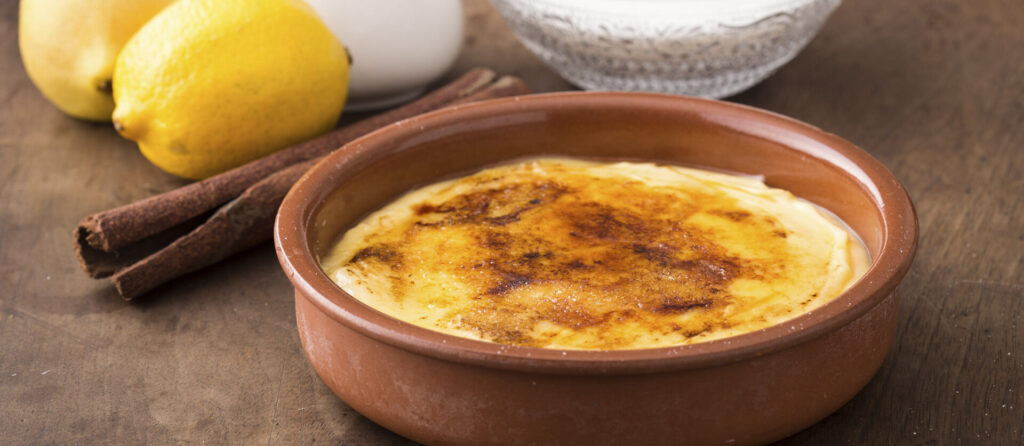
It’s tempting to call crema catalana a cousin of crème brûlée, but that would be doing it a disservice. While both feature a creamy custard with a burnt sugar top, crema catalana is flavored not with vanilla, but with cinnamon and citrus zest. It’s lighter, airier, and somehow more defiant—less French elegance, more Mediterranean swagger.
At home, it’s shockingly simple to prepare. Egg yolks, sugar, milk, cornstarch, lemon peel, and cinnamon come together over gentle heat. Once cooled and set, it’s sprinkled with sugar and caramelized, traditionally using a hot iron disk (though a kitchen torch or broiler works just fine). The crack of that first spoon breaking through the glassy surface is pure delight.
Calçots and Romesco: A Seasonal Celebration of Fire and Flavor
Every early spring, Catalonia explodes in calçotadas—festivals where people gather to grill calçots, a type of sweet green onion. They’re charred black over open flames, then wrapped in newspaper to steam, making the inner layers tender and smoky. You peel them with your hands, dip them into romesco sauce, and tip your head back as you lower the slippery onions into your mouth.
Replicating the calçot experience at home is more accessible than it seems. While authentic calçots may be hard to find, spring onions, leeks, or even baby shallots can substitute. Romesco, made from roasted red peppers, almonds, garlic, tomato, olive oil, and vinegar, is the real showstopper. It keeps well in the fridge, pairs beautifully with meats and vegetables, and can turn a plain grilled chicken breast into a dish worthy of applause.
Pa amb Tomàquet: Humble Bread, Elevated to Icon Status
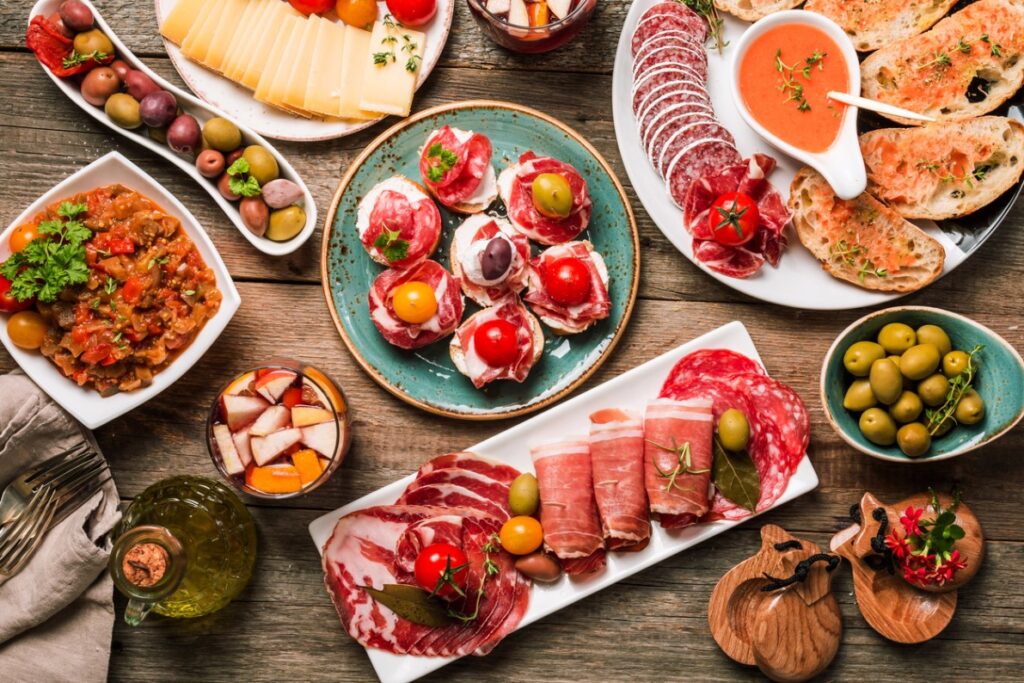
Few dishes encapsulate Catalan identity like pa amb tomàquet. It’s deceptively simple: rustic bread rubbed with garlic and ripe tomato, drizzled with olive oil and sprinkled with salt. Yet when done correctly, it becomes something greater than the sum of its parts—a celebration of texture, acidity, fat, and salt.
This is not bruschetta. There are no diced tomatoes, no toppings necessary. The tomato is rubbed directly onto the toasted bread until only the skin remains in your hand. A very ripe tomato is essential; plum tomatoes or Catalan varieties like tomàquet de penjar are traditional. The oil should be fruity and golden, the salt flaky and assertive. Serve it with jamón ibérico or anchovies, and suddenly you’re in a tapas bar in the Gothic Quarter of Barcelona.
Canelons: A Christmas Classic Worth Any Sunday
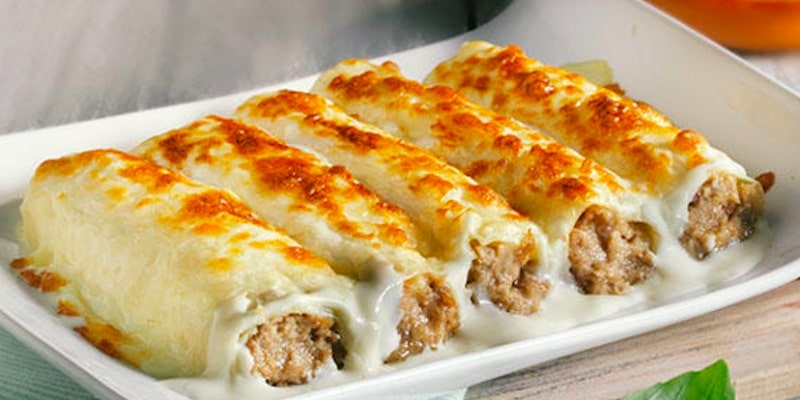
Catalonia has a unique Christmas tradition: on December 26, it’s customary to make canelons, or stuffed pasta tubes, using leftover meat from holiday feasts. While Italians might claim the original dish, Catalans have made it uniquely theirs.
The filling is rich and finely ground—roast pork, beef, or chicken, often blended with liver or foie for decadence. The béchamel is thick, creamy, and poured with a heavy hand. The whole thing is baked until bubbly and golden. Making canelons at home may be an undertaking, but it’s an act of love, a celebration of economy and indulgence in the same breath.
Bringing It All Together: A Catalan Night at Home
You don’t need to transform your entire kitchen into a bodega to enjoy Catalan food. Sometimes it starts with a single dish, an escalivada served cold on a warm day, or a crema catalana made just because. But there’s magic in going further—building a night around it.
Start with olives, anchovies, and pa amb tomàquet. Follow it with a suquet or a grilled meat with romesco. End with crema catalana, and sip on a glass of cava or Priorat wine. The music of Manu Chao or a classic rumba catalana playing softly in the background doesn’t hurt either. Creating a memorable experience like this often involves exploring new skills and traditions, much like how individuals broaden their opportunities by engaging in thoughtfully structured career training.
Catalan cuisine is generous and grounded, sophisticated without snobbery. It invites you to use your hands, to eat slowly, to let the flavors do the talking. It’s built on memory and improvisation, on grandmothers and chefs, on the sea breeze and mountain smoke. To cook it at home is to open your door not just to a new style of cooking—but to a whole culture that values boldness, warmth, and the joy of sharing.
So take a risk. Burn some peppers. Rub some tomatoes. Make a mess with romesco. Let Barcelona come alive in your kitchen. The spirit of Catalonia is waiting.