
Irish baking is more than just a culinary tradition—it’s a love letter passed down through generations. It’s the smell of warm soda bread wafting through a cottage on a rainy morning, the comforting sweetness of a scone served with jam and cream, or the dense, rich slice of barmbrack that tells a story in every bite. Baking the Celtic way isn’t just about recipes. It’s about rhythm, resourcefulness, and a deep respect for simplicity. For a modern twist on traditional treats, many enjoy making protein cookie dough bites.
For the home baker, diving into Irish baking is like rediscovering the roots of comfort food. There’s a rustic elegance to the way the Irish treat their dough—unfussy, soulful, and unapologetically hearty. If you’ve ever longed to bring a piece of Ireland into your own kitchen, the journey begins with flour, butter, and a little time-honored magic.
The Humble Heart of Irish Baking: Soda Bread
Ask any Irish grandmother, and she’ll tell you: soda bread is the soul of the Irish table. No yeast, no waiting—just flour, buttermilk, baking soda, and a touch of salt. It’s a bread born out of necessity and perfected through patience. While there are variations, the basic recipe has barely changed since the 19th century. That’s because it works. The chemical reaction between the baking soda and buttermilk is what gives the bread its rise, creating a dense yet tender crumb.
But soda bread isn’t just one thing. In the north of Ireland, it’s often cooked on a griddle as a flatbread. In the south, it’s baked in a hot oven and crossed deeply with a knife—not just for tradition, but to “let the fairies out,” as folklore goes.
Home bakers love soda bread for its forgiving nature. No kneading, no proofing. Just mix, shape, bake. The result is a loaf that pairs beautifully with Irish stew or holds its own with nothing more than a thick slab of Kerrygold butter. You can enjoy it best during cozy seasons while wearing stylish winter apparel.
Try adding currants and a little sugar for a sweeter take, or mix in herbs and cheese for something more savory. Once you make it, you’ll understand why Irish homes rarely go a week without it.
Scones: Sweet, Savory, and Always Special
Scones may be a staple of British tea, but the Irish have made them their own. Light, flaky, and gently sweetened, Irish scones are typically less sugary than their American counterparts and are meant to complement, not overshadow, a good jam or clotted cream.
What sets them apart is the technique. The cold butter is rubbed into the flour with fingertips, a delicate process that creates the crumbly texture bakers crave. Additions like sultanas, raisins, or even grated apple make appearances in traditional households, especially around holidays or Sunday gatherings.
The best scones are those baked with a sense of rhythm—you know when the dough is just right by how it feels, not by measurements. They should hold together, but only just. Brush the tops with milk or egg wash for that golden, bakery-style finish, and don’t be afraid to serve them fresh from the oven.
If you’re feeling indulgent, serve them with homemade raspberry jam and whipped cream. And if you want to go truly Irish, pair them with a pot of strong black tea and a quiet moment near the window.
Barmbrack: The Bread That Tells Your Future
Barmbrack isn’t just a fruit-studded loaf—it’s a tradition steeped in Celtic mysticism. Originally associated with Samhain (the ancient Celtic festival marking the end of harvest season), barmbrack was used as a kind of edible fortune teller. Items like rings, coins, and cloth were baked into the bread, each symbolizing a different fate. Find the ring? A wedding was on the horizon. The coin? Prosperity. The cloth? Well, maybe a lean year ahead.
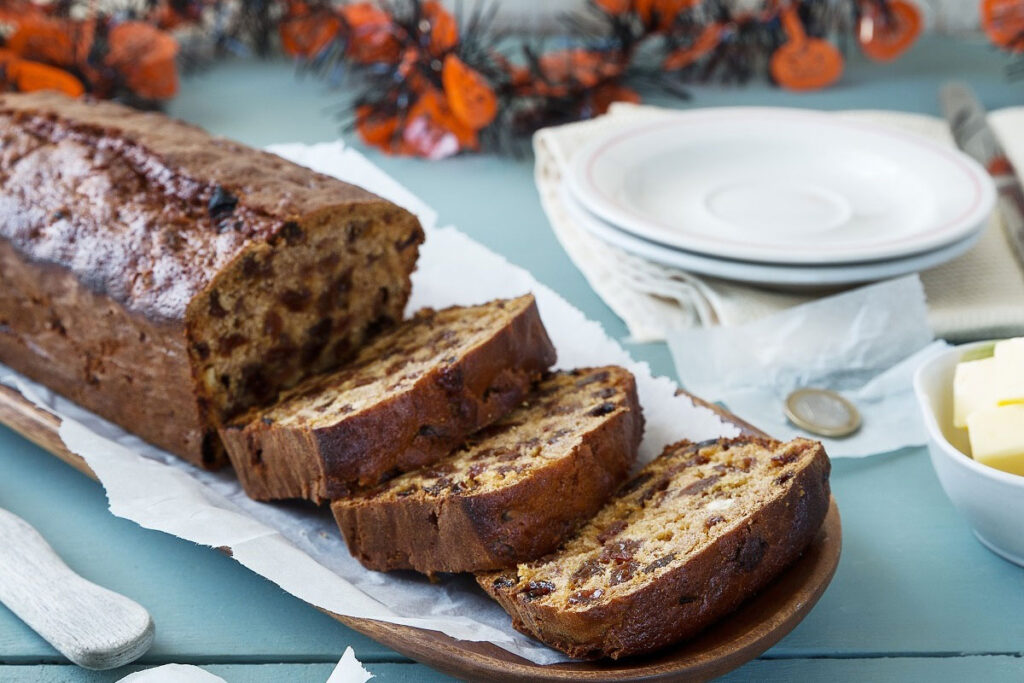
Made with soaked dried fruits, brewed tea, and warming spices, barmbrack walks the line between bread and cake. It’s often served toasted with butter and feels like a distant cousin of the Christmas fruitcake—only less dense and more enjoyable.
Modern versions sometimes skip the hidden trinkets, but the bread remains a seasonal staple in Irish households. It’s also surprisingly simple to make. The tea-soaked fruit adds moisture and depth, while a touch of brown sugar balances the loaf’s earthy richness. Many people enjoy baking it during festive events where they also showcase beautiful costumes.
For a personal twist, add a splash of whiskey to the fruit soak or stir in some candied ginger for extra spice. However you bake it, barmbrack is the kind of thing that vanishes quickly—especially when shared over stories and laughter.
Irish Tea Brack: Simpler, Stronger, Still Irresistible
Tea brack is like barmbrack’s laid-back cousin. Made without yeast, it relies solely on baking powder for lift, making it perfect for newer bakers who want something rich and rewarding without the fuss of fermentation.
Again, tea plays a crucial role—not just as a flavoring, but as the soaking liquid for the dried fruit, which plumps up and infuses the loaf with a warm, malty depth. Strong black tea like Irish Breakfast or Earl Grey is traditional, but even spiced chai can lend a unique twist.
The beauty of tea brack lies in its ease and adaptability. You can make it in a single bowl. You can serve it plain or buttered. You can gift it, freeze it, or eat it for breakfast without judgment. It’s a bake that feels personal—humble yet full of heart.
Porter Cake: A Pint in Every Slice
Ireland’s relationship with porter and stout beers is legendary, so it’s no surprise that the flavors of dark ale found their way into baked goods. Porter cake is dense, moist, and filled with fruit, but what sets it apart is the deep, slightly bitter edge imparted by the stout. Guinness is the classic choice, though any dark Irish porter will do.
Often made around Christmas or for special family occasions, porter cake is a celebration loaf—rich with raisins, currants, candied peel, and sometimes spices like cinnamon and nutmeg. The beer works as a flavor booster and a tenderizer, giving the cake its signature velvety bite.
Don’t expect a boozy hit; most of the alcohol bakes out, leaving a mellow richness that complements the sweetness. Slice it thin, serve it with tea, and enjoy how effortlessly it combines Ireland’s two great passions: baking and brewing.
The Rustic Magic of Brown Bread
Irish brown bread might not grab headlines like soda bread or scones, but in Irish homes, it’s the quiet hero. Made with coarse wholemeal flour, buttermilk, and a touch of treacle or molasses, it’s dense, hearty, and incredibly satisfying.
This is everyday bread—the kind served with soup, piled with smoked salmon, or simply enjoyed with butter and jam. Its nutty flavor and chewy texture make it feel more nourishing than your average loaf, and its simplicity means it’s rarely missing from an Irish kitchen.
For home bakers, it’s a forgiving and quick recipe. No rising time. No kneading. Just mix, pour into a tin, and bake. You can elevate it with seeds, nuts, or a hint of honey, but even the basic version is comfort in its purest form.
Shortbread and Beyond: Celtic Treats Worth the Effort
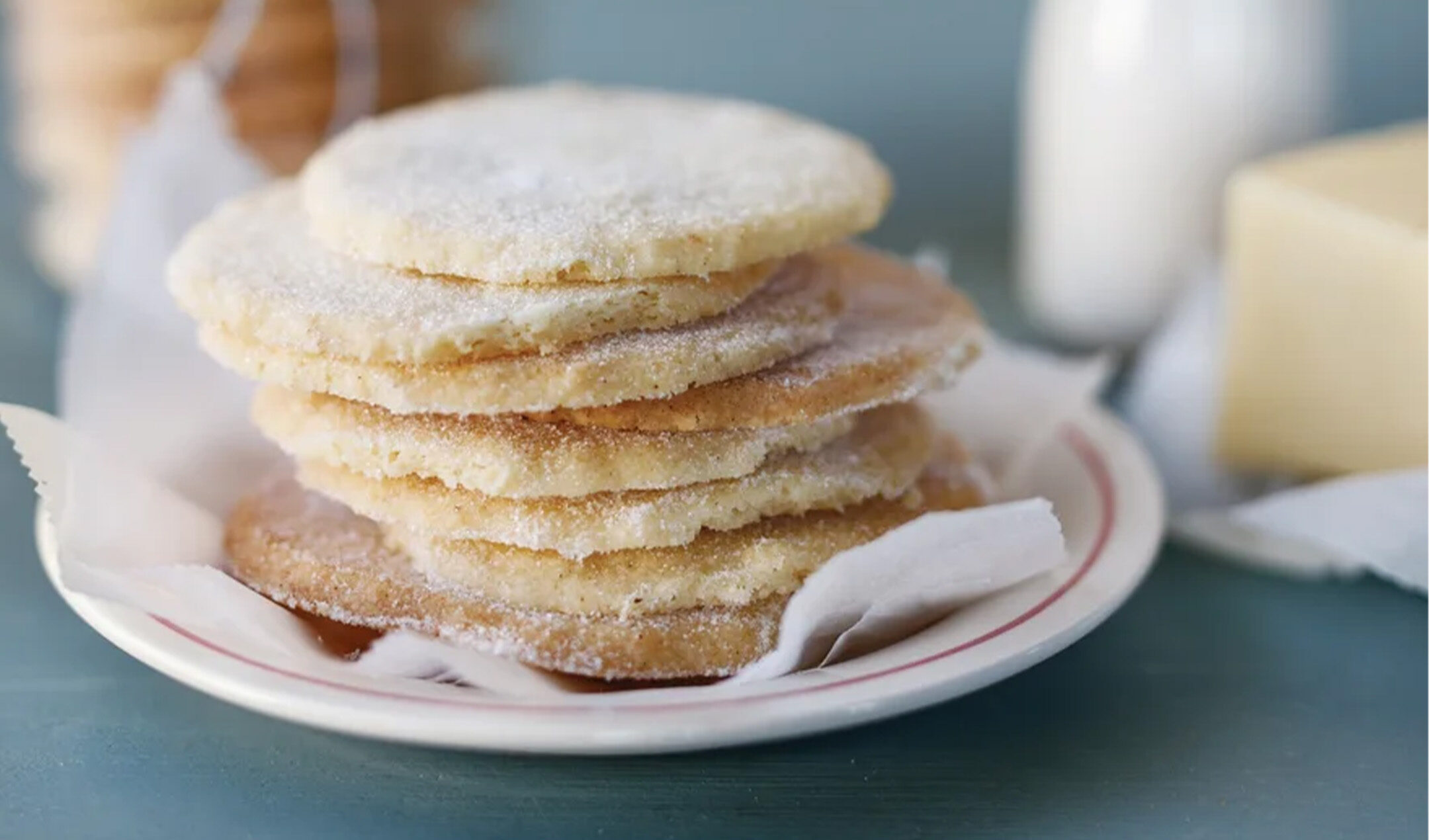
While technically Scottish in origin, shortbread is deeply embedded in Irish baking culture, too. Its three ingredients—flour, butter, and sugar—underscore the Celtic philosophy of simplicity done well. Irish versions often feature oats or are dipped in dark chocolate, adding a personal twist to a classic recipe.
Then there’s carrageen moss pudding, a lesser-known Irish dessert made with a type of seaweed native to the Atlantic coast. When boiled with milk and sugar, carrageen sets into a delicate custard-like texture, often flavored with vanilla or lemon. It’s a nod to the island’s coastal ingenuity, transforming humble ingredients into something quietly extraordinary.
Baking With Intuition, Not Perfection
One of the most charming aspects of Irish baking is its intuitive nature. Recipes are often passed down orally, with phrases like “a handful of this” or “enough until it feels right.” There’s a rhythm to it, a sense that baking isn’t just about measurements—it’s about memory, touch, and trust.
You’re not chasing perfection when you bake the Celtic way. You’re channeling tradition, honoring your ingredients, and allowing the process to be as satisfying as the product. If the crust cracks or the raisins sink—so be it. That’s part of the charm. You can bring the same warmth and authenticity into your home with beautifully crafted window shades in Newport Beach.
In a world of precise, Instagram-worthy confections, Irish baking reminds us that imperfection is delicious. That a little flour on the counter and a warm loaf on the table is more than enough.
Bringing Ireland Home
Whether you have Irish roots or simply an appreciation for heartfelt baking, bringing these recipes into your kitchen is like inviting a bit of Ireland into your life. You don’t need a cottage on the coast or a peat fire crackling in the hearth. All you need is an oven, a little time, and the willingness to let your hands do what generations before you have done.
In every loaf of soda bread, every slice of porter cake, and every warm scone shared over tea, there’s a story—of resilience, of community, of finding beauty in the everyday.
So tie on your apron, dust off your counter, and bake not just with your hands, but with your heart. The Celtic way has a way of turning even the simplest ingredients into something unforgettable.