
In the heart of the Pannonian plain, among the patchwork of fields, forests, and rivers that stretch across Vojvodina, an unlikely yet deeply rooted culinary tradition continues to thrive—the legacy of German cuisine, transplanted, adapted, and lovingly preserved over centuries. While modern maps draw clear lines between countries, flavors and food traditions often cross borders with ease, carried by generations of migrants in pots, pans, and memories. One of the most compelling culinary migrations in this region is that of the Danube Swabians, or “Donauschwaben,” ethnic Germans who settled in Vojvodina during the 18th and 19th centuries.
The Danube Swabians brought with them not only language and culture, but also a distinctive culinary repertoire shaped by their Germanic roots—primarily from Bavaria, Swabia, and Alsace—infused over time with the ingredients, techniques, and traditions of their new home in the Balkans. What emerged in the fertile farmlands of Vojvodina is a cuisine that is neither fully German nor entirely Serbian, but a rich hybrid of both: hearty, grounded, and deeply comforting.
The Danube Swabians: Carriers of Culinary Memory

The Danube Swabians were part of a larger wave of Central European colonization in the 18th century, invited by the Habsburg monarchy to repopulate and cultivate regions in the newly conquered southern territories of the Austro-Hungarian Empire. These settlers arrived in what is now Vojvodina, Romania, and parts of Hungary, bringing with them their agricultural expertise and age-old recipes.
In Vojvodina, they formed villages that still bear traces of their heritage—geometric street layouts, Lutheran and Catholic churches, and homes with thick walls and red-tiled roofs. Their food, however, is perhaps the most persistent and beloved legacy they left behind. Recipes that were once whispered in German dialects around communal kitchens now survive in Serbian, often passed down through families that may not even speak German anymore, but still gather around the table to eat as their ancestors did.
This is the story of how sauerkraut met paprika, how pork schnitzels took on a Balkan flair, and how a people far from home used food to preserve their identity—and transform a new land in the process.
Meat, Bread, and Fermentation: Cornerstones of the Cuisine
If there is a backbone to Danube Swabian cooking, it is pork. In traditional villages of Vojvodina, where almost every household raised pigs, butchering was not just a necessity but a ritual, often celebrated with family and neighbors in what’s known as “svinjokolj” or “disznótor.” This event, though common across Central Europe, took on special meaning in German-speaking communities, where every part of the pig was used to prepare sausages, smoked hams, lard for cooking, and blood puddings like Grützwurst.
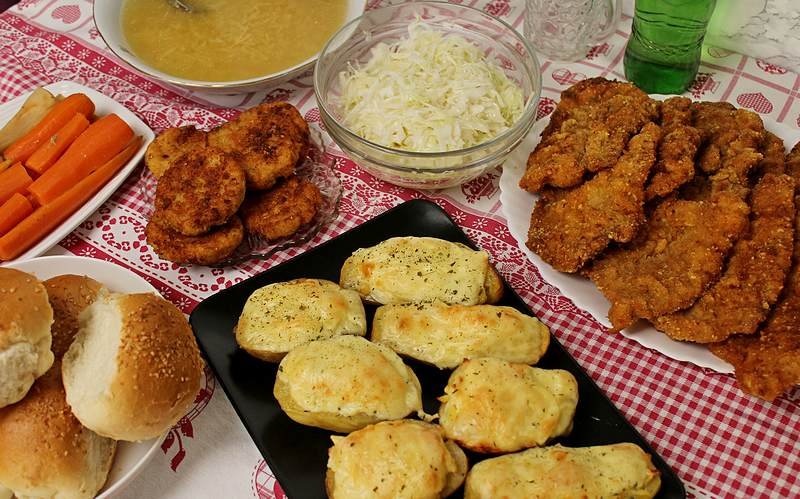
From Bavaria came the tradition of meticulously crafted sausages, like Weißwurst or Bratwurst, which evolved locally into variations like kobasice spiced with garlic, paprika, and caraway. Dishes like Schweinebraten (roast pork) were seasoned with mustard and caraway seeds, often served with fermented sides such as sauerkraut or pickled vegetables, which the Swabians prepared in barrels in their cellars—techniques still practiced today in Vojvodina’s countryside.
Bread was another essential. German settlers introduced rye and sourdough breads, typically baked in wood-fired ovens. Over time, kiflice—buttery crescent rolls that could be filled with jam, cheese, or pork cracklings—became a staple on the Vojvodinian table. These rolls bridge both German and Balkan traditions, and their popularity endures at family gatherings, religious holidays, and fairs.
A Touch of Sweetness: Cakes, Tortes, and Pastries
While the savory side of German-Vojvodinian cuisine is deeply rustic and hearty, its sweets and baked goods offer elegance and sophistication, often revealing Austro-Hungarian influences. Traditional Danube Swabian households baked an array of desserts that combined German technique with local ingredients such as walnuts, poppy seeds, sour cherries, and plums.
One iconic dessert is Bejgli, a rolled yeast cake filled with ground poppy seeds or walnuts, especially common during Christmas and Easter. Though now widely considered Hungarian, it has deep roots in German-speaking communities as well. Another beloved treat is Kuglof (Gugelhupf), a marbleized or fruit-studded bundt cake that exemplifies festive baking in German culture. Its distinct circular shape made it a centerpiece on many holiday tables, symbolizing abundance and continuity.
And then there are the tortes: multilayered, frosted, and often filled with jam or custard, like Dobos torte or Esterházy torte, both of which were adopted and adapted by German and Hungarian families alike in Vojvodina. Baking was often a family affair, passed down from mother to daughter, sometimes through worn, handwritten recipe books that are now treasured heirlooms.
Influence Meets Adaptation: Balkan Ingredients, German Methods
What makes the German culinary legacy in Vojvodina so distinct is not simply the replication of traditional recipes from the homeland, but how they were transformed through interaction with local Balkan culture. Over time, German techniques were applied to Serbian ingredients, resulting in hybrid dishes that are unique to the region.
Consider sarma, a dish found throughout the Balkans: minced meat and rice wrapped in cabbage leaves. In German-Vojvodinian homes, sarma is often milder and more uniform, shaped with surgical precision and sometimes baked instead of stewed. Or take goulash, which originated in Hungary but took on Germanic characteristics in Vojvodina—made thicker, heartier, and served with semelknödel (bread dumplings) instead of noodles.
Even strudels evolved. The classic apple strudel (Apfelstrudel) now appears alongside cherry, poppy seed, and cheese versions, often made with thinner, stretchier dough influenced by Serbian and Hungarian techniques. Local produce like paprika, plum, and cornmeal entered the German kitchen, creating new dialects of flavor that spoke both to heritage and adaptation.
Tables That Tell Stories: Preserving the Legacy
Today, the number of ethnic Germans in Vojvodina has diminished due to post-World War II displacements, migrations, and the fading of once-isolated village communities. However, the food has remained, lovingly preserved by locals of all backgrounds who have embraced German dishes as part of their own culinary identity.
In towns like Sombor, Apatin, and Zrenjanin, festivals and food fairs still celebrate Swabian heritage. Community centers host cooking classes and “kitchen memory” projects where elders share recipes with younger generations. Meanwhile, Serbian families who grew up next to German neighbors or married into mixed households continue to make strudels, roast pork, and creamy potato salads using family recipes passed down across cultures.
Some restaurants, especially in tourist towns or ethnographic villages like Kulpin and Subotica, have even begun to reintroduce traditional German-Vojvodinian dishes to a wider audience. These culinary revivals are not just nostalgic—they are acts of cultural preservation, honoring the role that food plays in remembering, reconstructing, and reconciling the past.
Beyond Nostalgia: A Shared Cultural Table
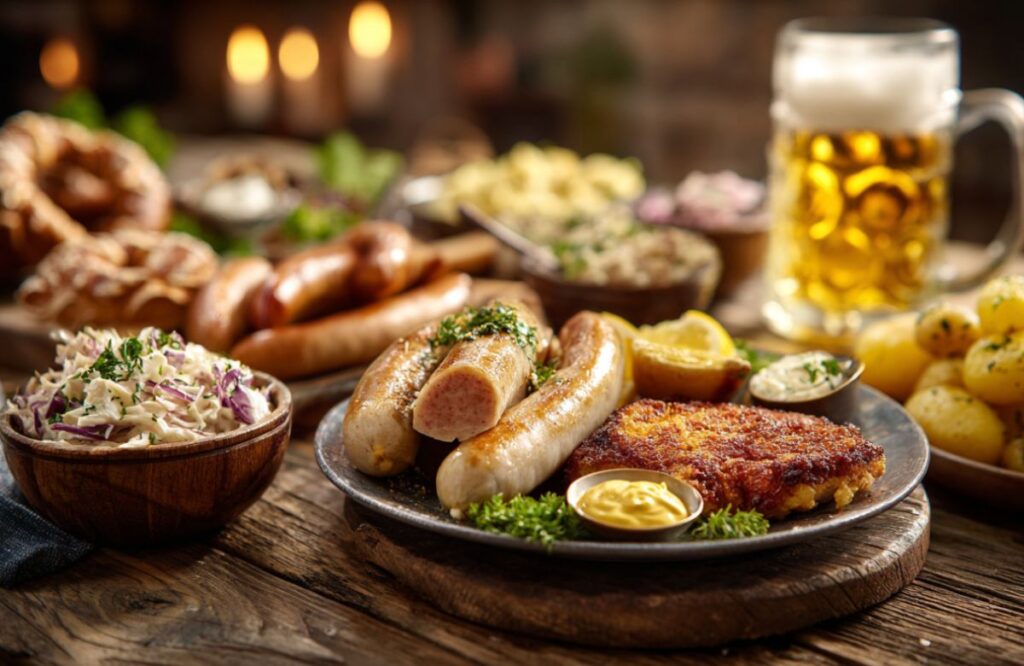
What remains remarkable about the German culinary legacy in Vojvodina is how deeply it has been woven into the broader regional identity. Though born from migration and sometimes marked by hardship, this cuisine has become a symbol of coexistence, adaptation, and shared history.
In a region known for its diversity—where Serbs, Hungarians, Slovaks, Romanians, Roma, and Germans have lived side by side—the kitchen has often been the most democratic of spaces. At the table, boundaries blur. Dishes are exchanged, recipes evolve, and food becomes a common language.
The Swabian dishes of Vojvodina may no longer be cooked by German hands, but they are still cooked with love, memory, and tradition. They remain a culinary bridge between Bavaria and Banat, a delicious reminder that culture is not static but living, breathing, and always capable of nourishing us in new ways.
Conclusion: From Soil to Soul
From the sausages spiced with Balkan flair to the strudels stretched thin with practiced hands, the German culinary legacy in Vojvodina is not a museum piece, but a living tradition. It is found in the clatter of wooden spoons, the bubbling of stews on rural stoves, and the quiet joy of serving a familiar dish to family and friends.
In a world that moves ever faster and forgets ever more, these recipes and the stories they carry are anchors to identity, belonging, and resilience. Whether you were born in Vojvodina or visit only briefly, one taste of these time-tested dishes reveals a deeper truth: that history, when shared through food, is not just remembered—it is lived.